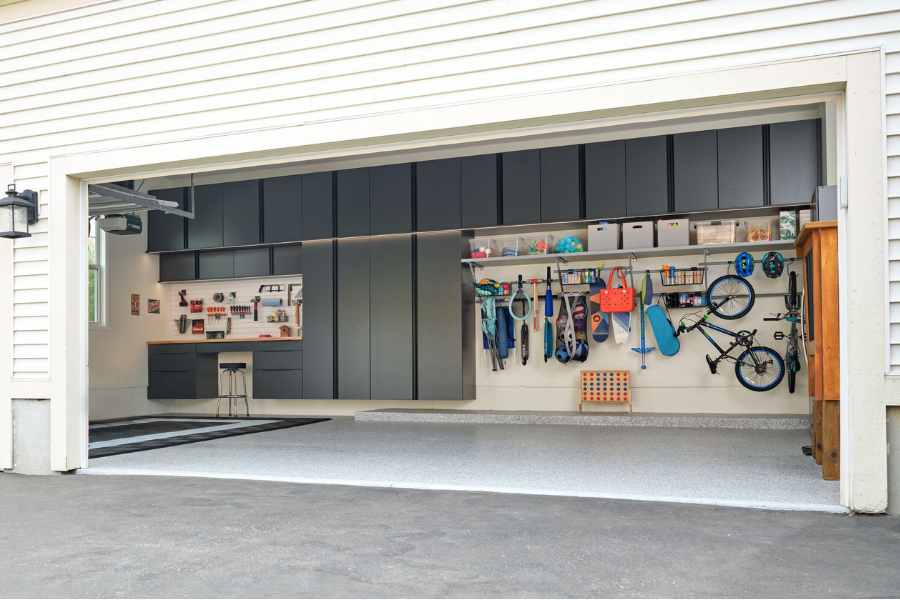
3 Best Wood Choices For Garage Cabinets
Choosing the right material for garage cabinets involves more than finding a finish that looks good. Garages experience changing temperatures, humidity, dust, moisture, and frequent wear, so cabinet materials must be selected with durability in mind. A product that performs well inside a climate-controlled kitchen may not deliver the same results in a garage.
Wood cabinetry remains an excellent option for homeowners who want a warm, finished appearance or a traditional workshop feel. However, old kitchen cabinets and inexpensive unfinished boxes may warp, swell, or deteriorate when exposed to garage conditions. We help homeowners compare materials and select a garage storage system that balances strength, appearance, maintenance, and cost.
Why Garage Conditions Affect Wood Cabinets
The garage can be a tough environment for natural wood. When humidity rises, wood absorbs moisture and expands. When temperatures drop or the air becomes dry, the same material contracts.
Minor movement is normal, but repeated seasonal changes can eventually cause solid wood doors, shelves, and cabinet boxes to crack or warp. This is especially common in garages without consistent heating, cooling, or insulation. Moisture from vehicles, wet equipment, and outdoor air can add even more stress.
Engineered wood products are often better suited for these conditions because they’re manufactured for greater dimensional stability. Rather than relying on a single piece of natural lumber, engineered materials use fibers, particles, veneers, or protective finishes to create consistent panels. Three of the most common choices are particle board, medium-density fiberboard, and plywood.
Particle Board Offers Basic Affordability
Particle board is usually the most affordable wood-based cabinet material. It’s manufactured by combining small wood particles with resin and compressing them into sheets. Its low cost makes it common in budget furniture and entry-level storage products.
The material can work for light-duty organization when it’s fully sealed and kept dry. It may be suitable for storing lightweight household supplies, seasonal decorations, or items that aren’t used frequently. However, standard particle board generally has a lower load capacity than other engineered wood products.
Moisture is its biggest weakness. Once exposed edges absorb water, the material may swell, soften, or begin to break apart. For that reason, we don’t typically recommend basic unsealed particle board for homeowners seeking dependable, long-term garage cabinet storage.
MDF Provides A Smooth And Practical Surface
Medium-density fiberboard, commonly called MDF, is made from refined wood fibers bonded under pressure. It’s denser and more uniform than standard particle board, creating a smooth surface that works particularly well with paint, laminate, and decorative finishes.
MDF offers a practical balance between price and durability. It’s usually more affordable than cabinet-grade plywood and has enough strength for many everyday garage storage needs. Its consistent composition also allows cabinet doors and panels to maintain a clean, polished appearance.
Unsealed MDF can still absorb moisture, so edge protection and surface finishing are essential. It may also be heavier than other panel products, making professional assembly and secure installation especially important. When MDF is properly coated and supported, it can provide reliable performance for the average homeowner.
Plywood Delivers Greater Structural Strength
Plywood is built from multiple layers of thin wood veneer bonded together in alternating directions. This layered construction gives it excellent strength and helps reduce the movement commonly associated with solid wood. Exterior-grade or cabinet-grade plywood can be especially effective in demanding garage environments.
One major advantage is its load-bearing ability. Plywood is often chosen for cabinets that will hold heavy tools, automotive supplies, hardware, or bulky equipment. It also tends to handle incidental moisture better than unfinished MDF or standard particle board, although it should still be sealed.
The primary drawback is cost. Quality plywood cabinetry may be considerably more expensive than MDF systems, and not every homeowner needs the additional strength it provides. We evaluate what will be stored before recommending a premium material that may exceed the customer’s actual needs.
Melamine-Coated MDF Adds Valuable Protection
Melamine-coated MDF is one of the most practical choices for residential garages. During manufacturing, a durable decorative surface is bonded to the MDF core, creating a protective exterior. This finish helps shield the material from stains, scratches, routine spills, and everyday abrasion.
Cleaning is also easier because the nonporous surface doesn’t readily absorb dirt or liquids. Many spills can be wiped away before they affect the underlying panel. Melamine is available in a range of colors and patterns, allowing homeowners to coordinate cabinets with flooring, wall storage, and other garage upgrades.
The coating can also reduce direct exposure to the MDF core. However, seams and cut edges must still be handled carefully during manufacturing and installation. We use professionally finished melamine garage cabinets because they offer an appealing combination of affordability, durability, and low-maintenance performance.
Which Garage Cabinet Material Is Best?
The best choice depends on how the cabinets will be used. Particle board may suit a limited budget and light storage, but it offers the least protection against moisture and heavy use. Plywood provides premium strength but may cost more than necessary for an average household garage.
For many homeowners, melamine-coated MDF offers the strongest overall value. It creates a smooth, attractive finish, supports common storage needs, and resists stains and surface wear. Its finished appearance also helps the garage feel like a planned extension of the home rather than an unfinished utility area.
Material is only one part of cabinet performance. Shelf support, hardware quality, wall anchoring, edge finishing, and professional layout also affect durability. A well-designed system distributes stored weight properly and keeps frequently used items within easy reach.
Create A Better Garage Storage System
The right cabinets can turn a crowded garage into a clean, functional, and organized space. By choosing materials suited to temperature changes, moisture, and daily use, we help homeowners avoid the frustration of sagging shelves, swollen panels, and prematurely damaged cabinetry.
Our professional garage cabinet installation services include material guidance, storage planning, and secure installation. Contact us today to request a quote, compare cabinet finishes, or learn how we can design a storage system around your tools, equipment, and household needs.
Related Questions
Can Wood Garage Cabinets Be Installed In An Unheated Garage?
Yes, but the material should be stable and properly finished. Engineered wood with a protective surface generally performs better than unfinished solid wood in changing temperatures.
Are Melamine Garage Cabinets Easy To Maintain?
Yes. Their smooth, sealed surface is easy to wipe clean and helps resist common stains, dust, and minor spills when edges remain protected.
Should Garage Cabinets Be Mounted Off The Floor?
Raised or wall-mounted cabinets can make cleaning easier and help protect the cabinet base from standing water, road salt, and moisture brought in by vehicles.
Can Garage Cabinets Be Customized For Tools And Equipment?
Yes. We can plan shelves, drawers, work areas, and enclosed storage around the specific tools, supplies, and equipment used in the garage.
.png)
.png)